Archive | curating RSS feed for this section

Learning is there to be found: How about an atlas?

9 Aug

Yesterday I had the pleasure to facilitate our home-grown, Portland-based learning professional’s group, the Collaborative Learning Network. (A big hats off to the IdeaLearning Group for bringing the CLN to life.) The topic I chose was the (purposely) vaguely titled, “The Evolving Role of the Modern Training Professional.”

I was equal parts heartened and disappointed to hear that pretty much everyone else was having the same struggle I was in figuring out how to leverage our world awash with digital artifacts into something to empower learners’ ability to take charge of their own learning. We touched on the idea that curated content could be an answer: Either curated and served in a defined “pool” of content, or learner-discovered and curated collections to demonstrate one type of learning outcome.

While we barely scratched the surface, the idea of curation has been rolling around my head a lot lately. A future topic for CLN, perhaps?

Serendipitously, while I was flipping though my scoop.it recommendations this morning, I came across The EduPunks’ Atlas of Lifelong Learning. A periodic table of sorts (and sort-able!), it organizes a galaxy of learning portals for the motivated seeker. While it has an academic bent, it’s got me wondering if something similar might work for specific adult learning/training topics.

It’s an idea to marinate a bit. In the meantime, check it out:

Image

Digital Curation as Learning Outcome

16 May

I was reading eLearning Magazine’s dispatches from the Learning Solutions 2013 conference, and appreciated a list they put together that encapsulated “Key Strategic Shifts to Watch.” After reading it through and giving it some thought, they really add up to one major shift in the way we should approach online learning: Learners taking control of their own learning.

I’ve touched on this topic before, but it warrants a deeper dive.

Information is not hard to find. Facts, ideas, hypotheses, art, opinions, stories, mendacities are impossible visitusto avoid. We are awash in digital content! There has been a lot of talk in the last decade of moving from “media literacy” to “digital literacy,” or what the terrific iDesign team at University of Alaska –Fairbanks have dubbed “Information Fluency.”

I could not agree more. Learners, from grade school through business leaders require the ability to sort through the sea of content to make sense of it all: Truth from fiction, actionable ideas from general knowledge, judgments from smears, opinions from facts. All of those are valuable content types—even smears—but through sorting comes understanding and eventually, knowledge.

But as I made the case before, knowledge is not my department.

What I am concerned about is how knowledge results in action (learning transfer). In other words, how does a learner demonstrate knowledge?

Participation. The smartest person in the room, her brain a repository of knowledge vast and deep, adds nothing if she chooses not to participate. In our business world, we know when someone is participating that results in adding value.

But in a learning environment, how do we measure that learning occurs? Formal assessments can, to certain degree, accomplish this. But adult learners have little appetite or patience for that—neither do kids, but too bad.

One useful, practical and engaging way for learners to take control of their own learning and to demonstrate learning transfer is by effectively curating their learning topic. Can the learner pull together digital artifacts that synthesize their learning into a meaningful content collection? Can the learner express how and why the collection hangs together, demonstrating the ability to both select useful content and to connect the dots into a coherent whole? If so, it’s a terrific way to demonstrate that learning has occurred outside an actual on-the-job problem-solving situation.

In fact, I have named my blog In The Learning Age in large part because ultimately information fluency is the central task we face no matter what our job descriptions might say. We need to be individual learners, and part of learning organizations, in order not to be left behind in this Learning Age. We are learning workers, and curation is a great tool for us – IDs, trainers, educators, PD professionals – to employ.

Check out both of these links below to read more about creating learning curators. I also invite you to check out my own attempt to curate content on my scoop.it page.

While both of these short, interesting pieces discuss scholastic applications, it is not much of a jump to see how they can be applied to training and professional development efforts, too.

Informal Online Learning: What the dog saw

10 May

Since puppies sell (who doesn’t love a good dog story?), here I go. Please stay on the scent, there is a point about informal learning:

Forrest

Our dog Forrest, who definitely learned exactly what he could get away with (RIP).

Dogs are social animals, and they learn through interactions with other dogs and humans. I’ve trained a few dogs in my life, and the best advice I ever got from a good dog trainer was: “Your dog is learning something every day. Your job is to make sure he is learning the things you want him to learn.” 

People are also social animals, and nothing is more social than learning. Indeed, even the most basic learning is based in discourse. At times that discourse may be a conversation with one’s self, but we learn through conversations about facts, ideas and applied skills. (It’s why folks in isolation end up muttering to themselves.) That’s just how social animals roll.

Bringing it back to the professional sphere—Every day we continue to learn something about our jobs, our value to our organization, our place in the world. In formal learning environments (synchronous or a-synchronous), teachers, trainers and IDs work hard to hold learners’ attention and deliver what we want them to learn. 

But really, that’s the tail wagging the dog, because that accounts for only 5% of adult learners’ time in the best of circumstances. Informal learning is the nod to the other 95% of learners’ time. 

Think about it: The most admired and valuable members of your team have attained that status in large part through time and effort spent understanding how your organization works, who the key stakeholders and partners are, when and where to “pitch” ideas and ultimately how to get things done. He or she didn’t learn any of that in school. We are social learners, and the folks we admire are those who take the initiative to learn the skills they need to thrive on the job. (A lot like a well-adjusted dog, don’t you think?)

As e-learning professionals, we should strive to:

  • Build the structures for informal learning
  • Support a learning culture that “teaches” people that:
    • what they know is important
    • sharing what they know is valuable
    • we expect and support the time and effort they make to learn outside formal learning events
  • Facilitate, guide and coach the process as needed

Informal online learning might take the form of online Communities of Practice, ask-the-expert sessions, forums, shared resources and tools, social media and curation opportunities, user-contributed success stories, etc. There is no one way to do it, and every situation is different. The question that should gnaw at us is: “If our learning cohorts are not learning what we want them to learn, then what ARE they learning?”

For more on Informal Learning, see Marcia Conner’s Introduction to Informal Learning and Jay Cross’ post about it on his site. I’m also a big fan of Jane Hart, and she has a great piece on ID and social learning.

Creative Commons and Discovery Learning

10 Apr

I’m not a graphic designer. I’m a very amateur photographer, and a mostly-non-recording Imagemusician. So, I’ve had little reason to pay very close attention to the Creative Commons movement, and how it is changing the way creators and consumers of digital media interact.

But with a little help from articles like this, I’m realizing more and more that how we share, use, re-share and reference resources that are readily available and a mere click away has a lot to do with the way we learn today. And even more about what ways in which we’ll be learning in a very close-at-hand tomorrow.

It references back to ideas about learners as their own curators and creators instantly enhance learning. For adult learning and professional development, it will be interesting to see the ways this intersects with the move towards “big data” and the movement towards available data crunching and graphic display technology that has been the buzz in the business world recently.

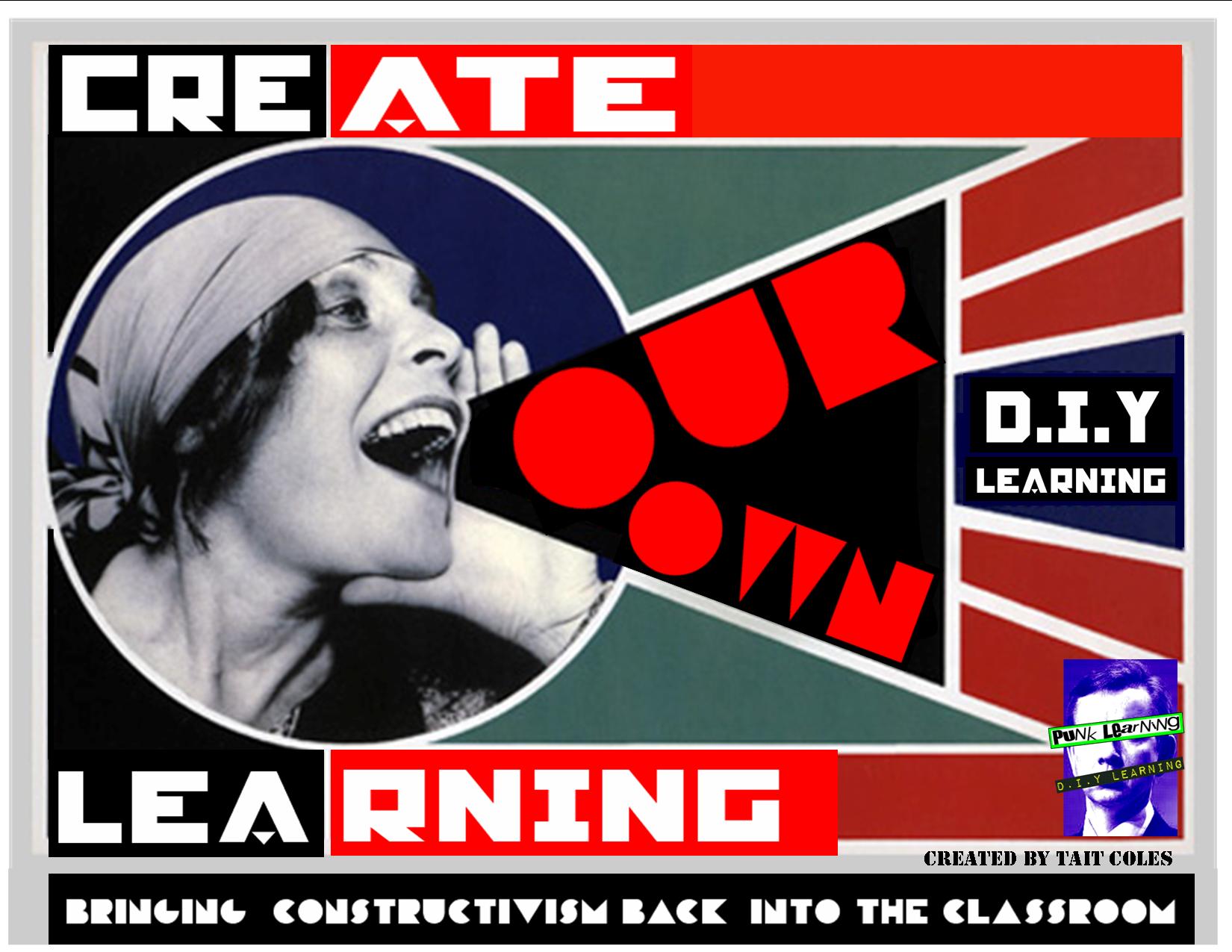
Is Constructivism the only path forward for adult learners?

18 Mar

Constructivism, wherein learners are best served by the ability to construct their own order, meaning and eventual deep understanding, has long been one of several competing (conflicting?!) learning theories.

However, with the rise of technology in learning–and all learning is technology driven to a large extent–we are seeing an ever greater emphasis on learners being the curators of their own learning paths. With the world awash in content, I hear more and more frequently from educators, trainers and e-learning SMEs that there is little point in creating new content on nearly any given subject when there are quite likely 10 easily found sources that have already done it better.

So, is the answer just to post links to existing content and let learners have at it? There are those who essentially recommend as much. Accordingly, the Internet becomes a constructivist paradise of learners connecting, synthesizing and creating new models in an ever-virtuous loop.

But I think most of us would agree that this assigns too much agency to the average adult learner: busy, distracted, and deep in the WIIFM learning mode. However, content creators have a valid frustration: “Hasn’t somebody already put together this learning path already?”

There is a middle ground: The trainer and e-learning practitioner as content curator and facilitator.

There is a lot more to be said, and in the coming weeks and months I hope to say some of it in these posts. For now, I just pose the problem: How do we effectively engage learners into wanting to become the self-directed learners that Constructivists say they should / could be?